Buyer Brief
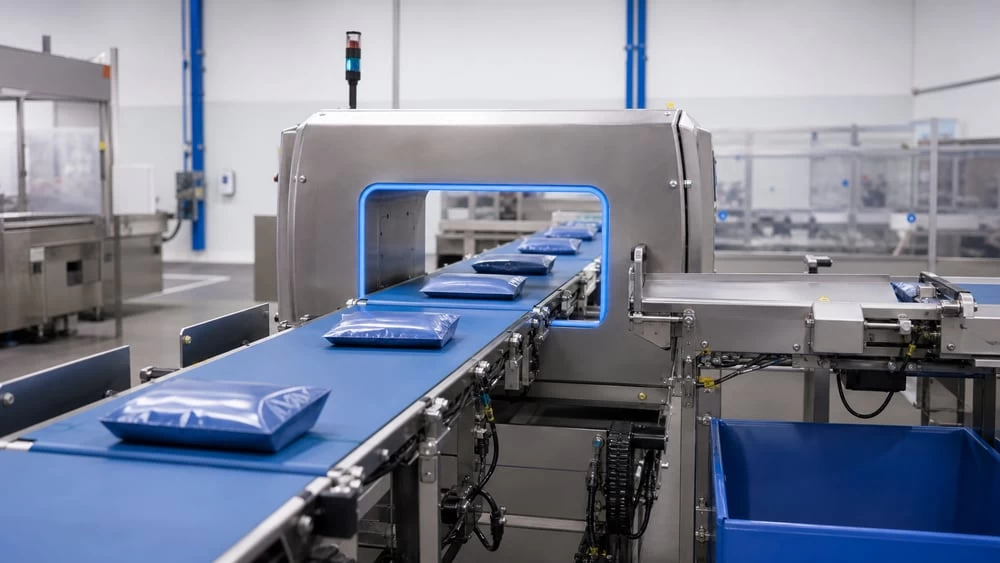
A metal detector is only one part of an inspection system. Buyers should define the product and package, aperture, line speed, spacing, belt and frame materials, detection expectations, reject method, confirmation logic, validation procedure, cleaning, and upstream/downstream interfaces.
In This Guide
Start with the actual product and package
Product moisture, salt, temperature, density, packaging, and orientation can affect detector performance. Provide representative products and every package size rather than relying on an empty-aperture demonstration.
State the smallest and largest product envelope and the required clear aperture. Excess unused aperture can reduce practical sensitivity, so the line should be designed around the product range.
Control product spacing and the metal-free zone
The detector supplier may require a defined metal-free region around the aperture. Conveyor frame, fasteners, rollers, wiring, reject devices, and adjacent equipment should respect that requirement.
Stable product spacing helps associate a detection event with the correct pack. Upstream metering, belt speed, photo sensors, and conveyor length should support the reject timing.
Treat reject and confirmation logic as critical
The reject device should suit package mass, speed, fragility, and available space. Define where rejected product goes, how the container is secured, and how a full bin or failed reject is detected.
Agree on detection, reject confirmation, alarm, line-stop, reset, and recordkeeping logic. Acceptance tests should use approved test pieces and procedures supplied by the inspection-system owner.
Integration questions for the RFQ
| Area | Question | Reason |
|---|---|---|
| Product | Which products and packages will run? | Defines product effect and aperture |
| Conveyor | What speed and spacing are required? | Controls dwell and reject timing |
| Materials | What metal-free zone is required? | Prevents structural interference |
| Reject | How is failed rejection detected? | Supports controlled disposition |
| Validation | Who owns the test method? | Aligns factory and site acceptance |
Recommended Project Workflow
Provide product samples
Include worst-case product effect, package sizes, temperatures, and orientations.
Approve the layout
Confirm aperture, metal-free zone, conveyor length, spacing, and reject location.
Write the sequence
Define detection, tracking, reject, confirmation, alarm, stop, and reset.
Run challenge tests
Use the agreed test pieces, products, positions, speeds, and documentation.
Frequently Asked Questions
Can detector sensitivity be promised without product testing?
A realistic result normally requires representative product, packaging, aperture, speed, and test conditions.
Why is product spacing important?
It helps the system identify and remove the correct product after a detection event.
What is a metal-free zone?
It is the detector supplier’s required clearance from surrounding metal that could affect performance.
Should the conveyor stop after a reject failure?
The required response should be defined by the buyer’s quality and risk procedure and implemented in the control sequence.
Who defines validation records?
The facility or quality owner should define the required test method, frequency, records, and acceptance criteria.
Planning a Conveyor Project?
Send the product, load, throughput, layout, environment, controls, and destination requirements for an engineering review.